
Fiber Encyclopedia
Silk: The gentleness and fragility of a protein fiber
Key Summary
Silk's luster comes from its triangular fiber cross-section, but it is sensitive to sweat, sunlight, and strong alkalis.
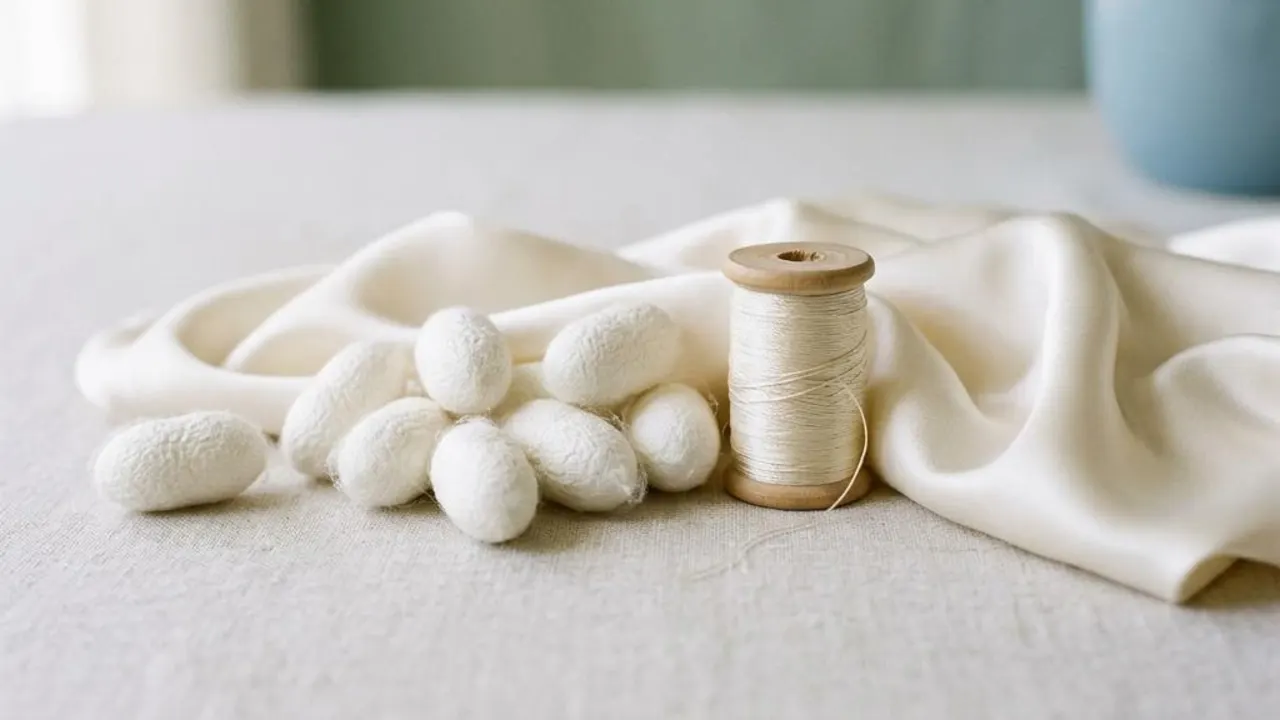
Derived from cocoons
Silk is a continuous protein fiber secreted by silkworms; its cross-section is approximately triangular, allowing it to refract light like a prism, which gives it a unique luster.
Vulnerable areas
Sweat, strong alkaline detergents, and long-term sun exposure can turn silk yellow or weaken fibers. Perfumes and antiperspirants may also leave marks.
Care Advice
For most silk garments, we recommend checking the label for dry cleaning or very gentle treatment, and avoiding prolonged direct sunlight.
Beyond silk's natural luster, there is dyeing and finishing
Silk garments may be satin, chiffon, georgette, or blends; the same fiber can appear in different thicknesses and textures. Smooth satin easily shows water rings and friction marks, and dark dyes may be affected by localized treatments; "Silk" is not a universal cleaning instruction.
For silk garments with linings, pleats, prints, or embellishments, refer to the care label for the entire garment. Some items may allow gentle water washing, while others require specific professional procedures; do not infer the method based solely on touch or price.
A single drop of water can form a water ring; how should this be understood?
Localized wetting may cause existing dirt, dyes, or finishing agents to migrate outward, leaving a ring once dry. This does not mean every silk item cannot touch water, but rather that local treatment carries different risks than overall uniform cleaning. Do not continue adding water and scrubbing water rings, or the marks may expand.
If you get perfume, oil, or beverage stains on your clothes, gently press to absorb excess liquid; avoid pulling or rubbing. For dry-clean-only items or those with unknown labels, do not attempt to use alcohol, bleach, or enzymatic stain removers yourself.
Three reminders for wearing, ironing, and storing
Use perfume and antiperspirant according to product instructions, avoiding direct application to silk surfaces; keep ventilated after wearing, and do not store in bags while damp. Follow label limits for ironing, noting that steam and water droplets can leave marks; do not raise temperatures arbitrarily just because you are using a pressing cloth.
Before long-term storage, check for stains on the collar and underarms, and store in a cool, dark place after ensuring it is completely dry. Yellowing, loss of luster, or white rubbing marks may not be fully restorable by cleaning. Providing clear photos to our customer service can help distinguish between stains and material degradation.
Additional Information
GINETEX: Garment Care Symbols and Process Limitations
For reference regarding washing, bleaching, drying, ironing, and professional cleaning symbols; individual garments are still subject to their full labels and brand guidelines.
FAQ
What should I know about Beyond silk's natural luster, there is dyeing and finishing?
Silk garments may be satin, chiffon, georgette, or blends; the same fiber can appear in different thicknesses and textures. Smooth satin easily shows water rings and friction marks, and dark dyes may be affected by localized treatments; "Silk" is not a universal cleaning instruction.
A single drop of water can form a water ring; how should this be understood?
Localized wetting may cause existing dirt, dyes, or finishing agents to migrate outward, leaving a ring once dry. This does not mean every silk item cannot touch water, but rather that local treatment carries different risks than overall uniform cleaning. Do not continue adding water and scrubbing water rings, or the marks may expand.
What should I know about Three reminders for wearing, ironing, and storing?
Use perfume and antiperspirant according to product instructions, avoiding direct application to silk surfaces; keep ventilated after wearing, and do not store in bags while damp. Follow label limits for ironing, noting that steam and water droplets can leave marks; do not raise temperatures arbitrarily just because you are using a pressing cloth.