
Garment Care
Dry clean or wet wash? Choose the appropriate method based on the garment.
Key Summary
Dry cleaning or laundering should be determined based on the care label, structure, and stains of the entire garment, not solely on price or fiber type. Dry cleaning uses specialized solvents, while laundering uses water as the primary medium; professional wet cleaning is another controlled process and cannot be treated like household machine washing.
What is dry cleaning?
Dry cleaning does not mean it is completely liquid-free; instead, it uses specialized solvents rather than water for cleaning. This reduces fiber swelling and is suitable for garments prone to deformation or shrinking when wet.
Which items require a dry cleaning assessment?
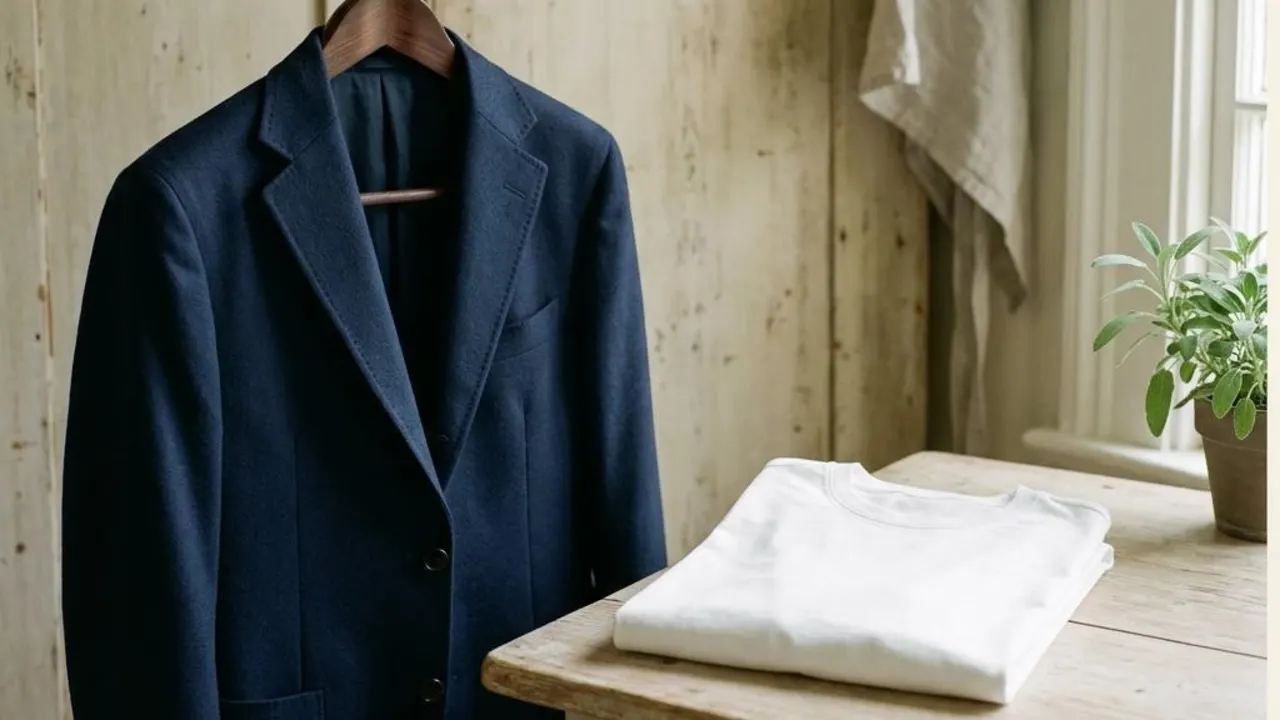
Garments labeled "Dry clean only" must be followed according to instructions. Suits and coats with linings, shoulder pads, or multi-layered structures, as well as some wool, cashmere, silk, and evening gowns, are also worth evaluating first; however, do not assume an item is definitely dry-cleanable based solely on the material name—decorations and the full label remain important.
Clothes suitable for water washing
Sweat stains and sugar-based stains (e.g., fruit juice) are more soluble in water, making water washing more suitable for daily items like cotton T-shirts, towels, and bed sheets.
How to decide
First, check the care label; if it states dry clean only, do not wash with water. If unsure, separate the items during collection and consult our customer service. Dry cleaning is priced per item, while Laundry Pickup & Delivery is priced per pound.
Don't just look at the fabric; also consider the entire construction of the garment.
Even with the same polyester label, care for a regular top vs. a fused-interlining blazer differs. Linings, shoulder pads, gold foil prints, leather piping, and trims may be more sensitive to water, solvents, or heat than the main fabric. Care labels for the whole item are more critical than generic online material-based advice.
"Washable" does not necessarily mean suitable for standard pound-laundry wash and dry cycles. If the label requires hand washing, flat drying, or no tumble drying, please point this out during booking so customer service can assess whether it can be arranged. Do not mix these directly with daily laundry.
Having stains does not mean Dry Cleaning is automatically more effective.
Sweat, sugars, oils, and pigments may coexist in a single stain. Dry cleaning is more suitable for certain oily soils, but not all water-soluble stains can be handled by the same process; nor is washing always more effective with higher heat. Specialist Stain Removal takes into account the stain composition, fabric type, and dyeing risk.
For example, a silk top stained with milk tea involves both beverage ingredients and delicate material; do not attempt to soak/wash it yourself just because the drink contains water. Keeping records of the stain source, time, and products already used is more helpful than blindly re-washing.
Clearly distinguish between services and fees when inquiring
Laundry Pickup & Delivery (by weight), Dry Cleaning (per piece), and Specialist Stain Removal are separate service inquiries. Please list the general garment quantity first, followed by the number of suits or coats, and finally indicate the stains requiring assessment; the starting prices on the website are not fixed quotes for all styles.
Do not use brand price or prestige as the sole standard for care methods. Customers should inform our support team about valuable, sentimental, unlabeled, or already damaged items; if risks are unclear, pausing treatment is safer than attempting a fix afterward.
What are the practical differences between dry cleaning, wet cleaning, and professional washing?
None of the three should be ranked as superior or inferior; rather, it depends on whether it is suitable for the specific garment. GINETEX professional care symbols separate dry cleaning from professional wet cleaning. For the average user, the most important thing is to avoid interpreting "do not wash" as "dry cleanable," or assuming that just because they see a "W," they can throw it into a home washing machine.
- General wash: processed with water and appropriate agents, but still subject to water temperature, mechanical action, and drying limitations.
- Professional Dry Cleaning: Uses specified solvents and procedures; decorations, dyes, and glued parts must also be considered.
- Professional Wet Cleaning: Requires specific equipment, supplies, and controls; it is not equivalent to the delicate mode on all household machines.
Why can't wool sweaters and lined suits be handled with the same answer?
According to Woolmark, some wool garments can be machine-washed or hand-washed according to the label, so the notion that "wool must be dry-cleaned" is inaccurate. However, for coats with bonded linings, shoulder pads, and lining fabrics, the overall structure must be assessed; you cannot simply apply the care method for sweaters.
Scenario: A sweater labeled for gentle washing but flat drying and a dry-clean-only blazer should be inquired about separately. Even if the primary compositions are similar, the former may not be suitable for general pound-rate wash/dry, and the latter cannot be water-washed to save costs.
Additional Information
GINETEX: Garment Care Symbols and Process Limitations
For reference regarding washing, bleaching, drying, ironing, and professional cleaning symbols; individual garments are still subject to their full labels and brand guidelines.
Specify cleaning and drying methods based on wool garment care labels; not all wool items follow the same procedure.
FAQ
Does dry cleaning use no liquid at all?
No. Dry cleaning typically uses professional solvents rather than water as the main cleaning medium; it still involves process control and post-cleaning finishing, and it does not guarantee that all accessories and stains are suitable for treatment.
Do all wool items need dry cleaning?
No. Some wool garments may be machine or hand-washable according to their labels, but this does not mean all wool can be processed with general wash-and-dry programs. Refer to the instructions for the entire garment rather than just the fiber name.
Can sweat stains be completely removed by dry cleaning alone?
Not always. Sweat and body oils can build up together, and the age of a stain and previous treatments affect the result. We also need to consider the fabric and its dyes; dry cleaning alone does not guarantee complete removal.
If the label says "Do not wash," does it mean it can be dry cleaned?
Not necessarily. It also depends on the professional care circle symbols and text restrictions. If both procedures are restricted or labeling is unclear, verify with the brand or a professional first; do not choose between them yourself.
Can dry cleaning and per-pound laundry be billed together?
Existing dry cleaning is charged per item, separate from standard weight-based laundry pickup/delivery. Special garment types and stain removal require prior assessment; please list the quantity, care labels, and requirements before confirmation, as total weight cannot be used to estimate all costs.