
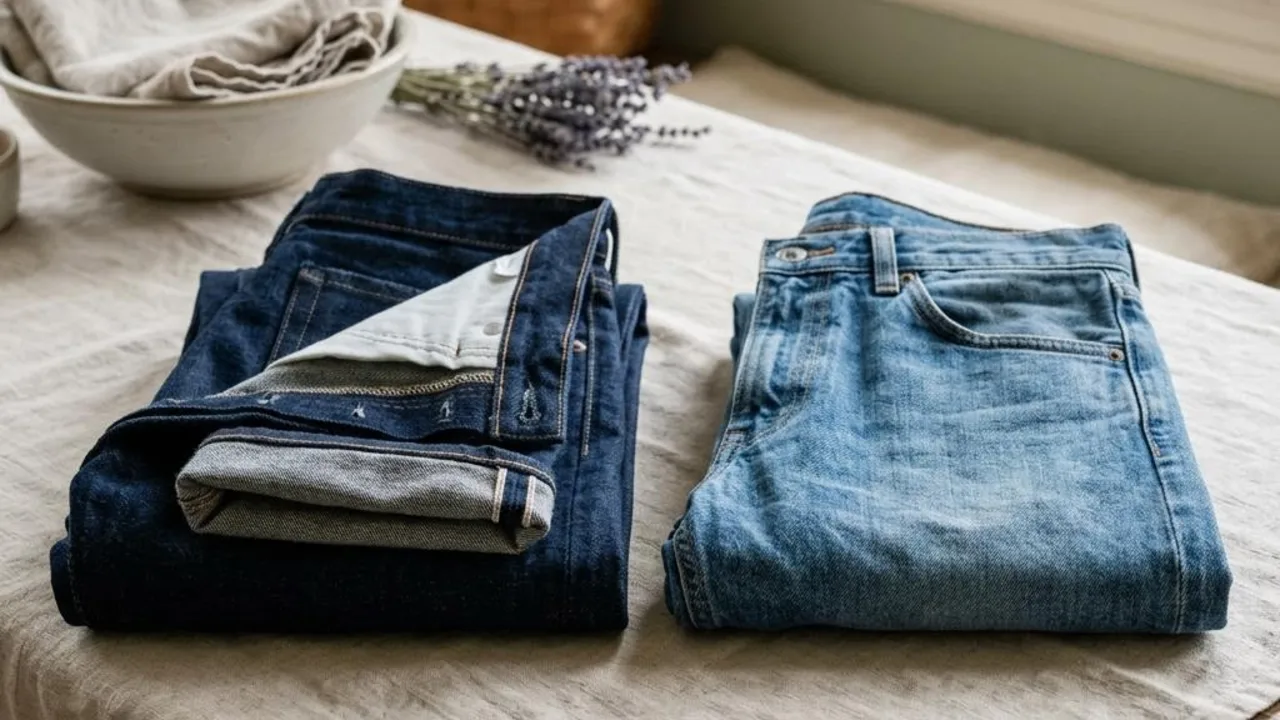
Categorization Tips
How to wash jeans for the first time? Color separation, reverse washing, and fading risks
Key Summary
For new jeans, check the care label first; separate dark items from light-colored clothes for the first wash. Follow brand instructions for turning garments inside out and check drying restrictions. Inside-out washing and laundry nets cannot guarantee against color transfer, and salt-water soaking should not be considered a permanent color-locking solution; see separate guides for non-preshrunk or elasticated styles.
What are the differences in care between raw, pre-washed, and stretch denim jeans?
Denim is not a single specification. Unsanforized raw denim may be expected to change size after initial treatment, processed washed denim has its own fading effects, and styles containing elastic fibers or leather labels have additional restrictions. Do not apply online raw denim breaking-in methods to all everyday jeans.
Record brand, style, and complete labels first before checking suitability for home care. Price does not substitute for instructions; intentionally washing to shrink is not a reliable method to fix ill-fitting sizes.
Why should new dark-colored jeans be separated from light-colored clothes?
New dark fabrics carry a risk of color transfer; washing just one item does not guarantee it will not affect others. Levi’s brand guidelines recommend separating new denim from light-colored items for initial washes and note that drying methods may impact fading and shrinkage.
One wash without obvious color fading does not mean it will remain stable forever. Water temperature, products, and wear and tear are all variables. Do not stack wet jeans directly on white towels, or assume that just because the color is the same, other care restrictions can be ignored.
Is washing inside out useful enough that I no longer need to sort garments?
Turning garments inside out follows brand guidelines to reduce surface friction, but it cannot completely trap dye inside the fabric. Laundry bags, turning inside out, and low temperatures are not permanent color-locking measures. Still, sort garments by color or care requirement if they are prone to lint or have different care needs.
Soaking in saltwater, vinegar water, or prolonged repeated soaking are not procedures approved by all brands. Unless garment and product limitations are confirmed, do not increase soaking time or mix agents for the purpose of home-remedy color locking.
How should pockets and accessories be checked before handing over jeans?
Deep pockets, coin pockets, and pant cuffs can easily trap tissues, sand, or small objects. Inspect each area first and list removable belts or decorations. Existing thinning, holes, or frayed designs should also be recorded, as washing cannot guarantee the preservation of existing damage.
- Empty all pockets and folded areas.
- Check information for new trousers, dark colors, non-pre-shrunk items, or elastic fabrics.
- Record fading, holes, prints, and leather parts.
- State washing and drying restrictions according to the label, and confirm the procedure with customer service.
Can I increase drying heat to make jeans dry faster?
Do not heat just to save time. Whether tumble drying is possible depends on the instructions for the entire garment; high heat may increase the risk of size and appearance changes. If the brand requires air-drying in the shade, you should not change to direct exposure or high-temperature drying, then expect the original color and elasticity to remain unchanged.
Scenario: Deep blue trousers with elastane labeled 'do not tumble dry' may not be suitable for standard pound-rate wash/dry. Explain these restrictions when inquiring rather than just using 'jeans' as the item name for a quote.
How many times should you wear jeans before washing; should you follow a fixed number?
Brand frequency recommendations cannot serve as a hygiene or usage standard for everyone. Short-term wear in dry conditions differs from situations involving sweat, mud, or food stains; items should be properly handled according to labels if soiled, rather than left uncleaned for long periods to preserve color.
Freezing or spraying fragrance does not replace the removal of dirt. If color bleeding is suspected, stop mixing clothes and record the sequence of discovery, consult a professional, and do not rely on reheating or more concentrated stain removers to restore it.
Additional Information
Levi’s: Denim care and washing
Read about separating denim by colour, washing and drying it inside out, and managing heat. Pay particular attention to care labels on raw, stretch or embellished denim.
GINETEX: Garment Care Symbols and Process Limitations
For reference regarding washing, bleaching, drying, ironing, and professional cleaning symbols; individual garments are still subject to their full labels and brand guidelines.
FAQ
Does soaking jeans in salt water prevent color fading?
We cannot make such guarantees. Different dyes, processing, and garment structures perform differently. It is not advisable to use salt water home remedies as a substitute for following garment labels and color separation; repeated long soaking may also increase unnecessary risks.
Can I wash jeans inside out in a laundry bag with white shirts?
Do not treat turning items inside out and using laundry bags as a color-protection measure; dyes can still transfer during washing. Dark new trousers should be separated from light-colored items, and you should check washing/drying restrictions and potential fiber shedding simultaneously.
Do all raw denim jeans shrink to the same size?
No. Pre-shrinking, fabric, sizing, and brand handling vary; you cannot use hot water or high temperatures to guarantee shrinking to a perfect fit; you should check the product's original details and care instructions.
Can putting jeans in the freezer replace washing?
Do not treat freezing as a way to remove mud, sebum, and stains. Whether cleaning is required should be judged based on actual dirt and labels; do not ignore cleaning for the sake of preserving color.
If jeans loosen after washing, can they be shrunk back with high heat?
Do not conduct such experiments. Heat may affect elastic fibers, dyes, and accessories; size changes may not be uniform or controllable. Issues with fit should be discussed with the brand or a professional tailor.