
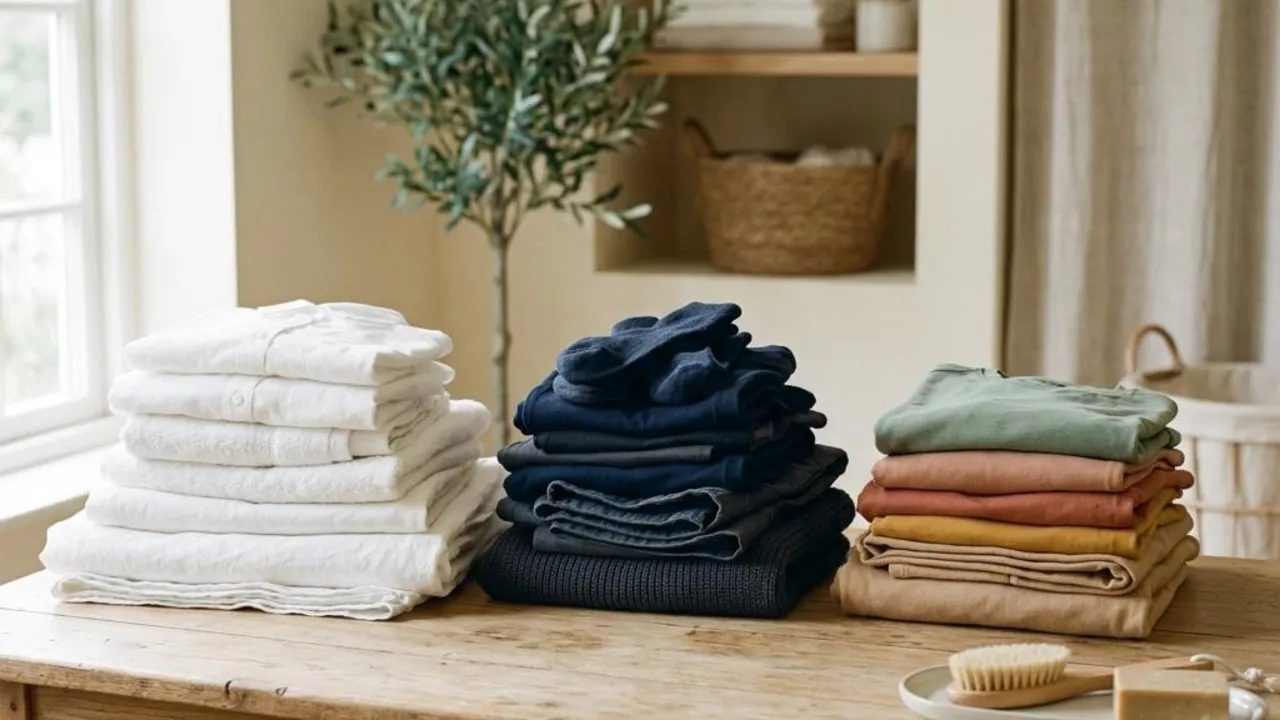
Categorization Tips
Laundry classification: color, material, and stain level
Key Summary
Laundry should be sorted first by care restrictions, then by color, thickness, linting potential, and soil level. Separate items that are dry-clean-only, hand-wash-only, or cannot be tumble-dried; even black towels, sportswear, and suits cannot be washed or dried together.
By color
Sorting laundry by white, light, and dark colors is the most basic method. New dark-colored items are prone to color bleeding during the first few washes and should be handled separately.
By material
Heavy cotton items like towels may produce lint, which easily sticks to black trousers or sportswear if washed together. Check labels for thin items, lace, or spaghetti straps; if appropriate for the cycle, use a mesh laundry bag to reduce snagging, but note that the bag cannot change wash and dry limitations.
According to degree of staining
Muddy sportswear and lightly worn shirts require different cleaning intensities. Processing heavily soiled items separately prevents dirt transfer.
When handing over to us
When using our Laundry Pickup & Delivery service, you do not need to sort everything perfectly. However, separating garments that are prone to fading, require dry cleaning only, or have special requirements is very helpful.
Actual classification order: limitations take priority over color
Remove items that cannot be machine washed, need hand washing, or special drying requirements, then separate whites, lights, and darks; finally, sort by thickness, lint, and soil level. This prevents putting dark suits and sportswear, which have different processing needs, together.
Even if it is just one new red top, do not mix it with white bedsheets just to fill the load. One successful wash without bleeding is not a permanent guarantee of colorfastness; always check for potential bleeding near seams on items with embroidery, color blocking, or prints.
Why do black clothes still attract lint or snag in the same bag?
The same color does not mean the same surface structure. Towels and fleece jackets easily shed lint, while smooth sportswear fabrics attract it; rough zippers, Velcro, and metal clasps can snag knit loops. Fasten all closures, separate snag-prone items, and do not rely on mesh bags to replace proper sorting.
- Separate lint-prone towels from clothes that easily attract lint
- Handle mud and sand carefully according to labels and material; do not shake vigorously indoors.
- For clothing suspected of dye or chemical contamination, inquire individually first.
Household collection examples and common misconceptions
For a batch of white towels, dark T-shirts, wool sweaters, and stained uniforms, they can be categorized into four groups for customer service. Sweaters require checking the label, and uniforms require stating the source of the stain; do not simply split them into "one bag for white, one bag for others" and consider the risk classification complete.
Bagging separately is a way to communicate requests, not a guarantee of separate machine cycles or specific products. If you require specific items to be handled independently, please explicitly inquire about arrangements and potential pricing impacts before booking, and proceed only after confirmation.
When you don't have many clothes, how do you categorize them to avoid taking risks just to make up a full load?
A small quantity doesn't mean you should wash incompatible items together. Separate items prone to color bleeding, snagging, or those unsuitable for general wash-and-dry cycles, then accumulate the rest as needed. Laundry should be kept dry; do not seal damp towels for days just to meet a weight quota.
ACI's sorting advice considers color, fabric type, and care instructions. For laundry pickup, clearly label bags with practical categories like 'White Towels,' 'Dark Daily Wear,' or 'Sweaters Requiring Assessment.' You do not need to specify cleaning agents or high-temperature programs.
- Read labels first and set aside clothing with special care restrictions.
- Keep new clothes, dark-colored items that may bleed, and color-blocked items separate.
- Separate fabrics that shed lint, attract lint, are heavy, or are prone to snagging.
- Please inquire about acceptance conditions for items with excessive mud, oil, or unknown contaminants.
Why shouldn't you tumble dry immediately when you suspect clothing has color migration?
For stained items, do not attempt to "lock the color" by reheating or increasing the temperature. Stop mixing with other items immediately, note when the issue was discovered and what products have already been used, then contact a professional to see if it can be treated. Color transfer, original fading, and stains are different issues; we cannot guarantee that a re-wash will restore the item.
Do not pour bleach directly onto colored garments, and do not use the fact that the soaking water remains clear as proof of permanent colorfastness. Color-blocked seams, prints, and decorations may have independent risks; when colorfastness is suspected to be unstable, conservative separation is safer than repeated chemical testing.
Additional Information
American Cleaning Institute: Laundry Basics
Read about sorting laundry, checking pockets, drying and storage to help with everyday care. When arranging a collection, share the care labels and any details we should know about your items.
GINETEX: Garment Care Symbols and Process Limitations
For reference regarding washing, bleaching, drying, ironing, and professional cleaning symbols; individual garments are still subject to their full labels and brand guidelines.
FAQ
Are all these black clothes? Can they be washed together?
Not necessarily. Black towels may shed lint, sportswear may attract hair, and suits may not be suitable for general washing. Sorting must still be done according to the full care label, fabric structure, and washing/drying restrictions.
Are white clothes always safe to bleach?
No. Whether bleaching is allowed is determined by the triangle symbol, fiber type, accessories, and product instructions; do not look only at whether the garment is white. Do not use bleach on white items that are not suitable for bleaching.
If new clothes don't bleed after one wash, is separation no longer necessary?
One instance of no visible color transfer does not mean it is permanently stable. Water temperature, cleaning products, abrasion, and color-blocked parts will all affect the situation; you should still judge based on the label and actual condition, and do not mix them directly with important white fabrics.
Can a laundry net replace sorting?
No. Laundry bags mainly reduce snagging but do not prevent dye transfer, or provide protection from laundry detergent, water temperature, or dryer heat; items with different care restrictions must still be handled separately.
Do I need to inform Customer Service after I have bagged my laundry for pickup?
You need to declare requirements that affect treatment, such as dry clean only, no tumble drying, susceptibility to color bleeding, and special stains. Separation into bags does not automatically imply separate machine washing or specified cleaning products; these arrangements must be confirmed separately.