
Garment Care
How to wash wool sweaters to prevent deformation? A practical guide to washing, drying, and professional care.
Key Summary
Not all wool sweaters are 'Dry Clean Only' or 'Machine Washable'. Follow the care label to choose between machine washing, hand washing, or professional service, and use appropriate products and drying methods. For garments requiring flat drying, avoid hanging them while wet, and never attempt to fix felting with hot water or forceful stretching.
Can pure wool and wool blend sweaters use the same process?
You cannot decide based solely on the composition percentage. Yarn processing, weave, garment weight, and decorations all affect care requirements; even with the same "wool" label, it is not contradictory for one item to be machine washable while another requires professional treatment. The garment label is more direct than a general formula found by searching "pure wool".
Woolmark explains that some wool garments can be machine-washed or hand-washed according to the label, which does not suggest putting all wool items into the same cycle. If the label is missing, it is a wool blend, or it has leather accessories, you should verify it rather than guessing based on touch.
Is it suitable to use regular detergent, bleach, or fabric softener on wool?
Products must comply with both the garment label and product instructions; do not apply standard stain removers, bleach, or multi-purpose cleaners directly to wool. Woolmark care information recommends suitable gentle, neutral wool detergents; the actual amount used depends on the product—it is not a case of the more concentrated, the more effective.
Also, do not keep adding fabric softener just because the sweater feels hard or dry. First, determine if it is due to residue, drying method, pilling, or normal wear and tear to avoid treating different problems as a simple lack of softness.
What steps should you take before washing wool sweaters?
Decide on procedural feasibility before selecting machine modes and products. Hand washable doesn't mean long soaking is allowed, and gentle machine wash doesn't mean all low-temp quick washes are suitable.
- Take photos of the labels and check the collar, cuffs, seams, and decorations.
- Confirm washing, mechanical action, and drying methods according to the label.
- Select suitable products, follow the dosage instructions, and do not mix stain removal products.
- If you are unsure or cannot meet drying requirements, stop first and inquire about professional arrangements.
Why shouldn't wet sweaters be hung on thin hangers?
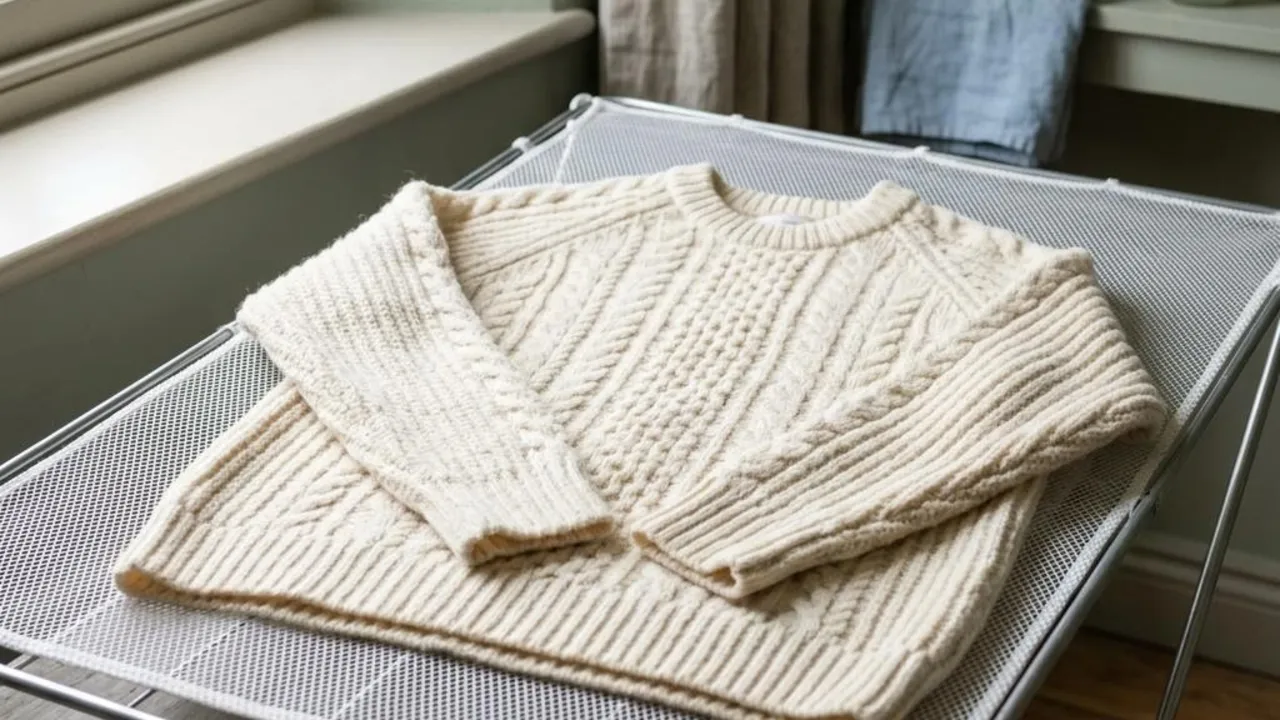
Wet weight concentrated at the shoulders can cause the garment to stretch, leave shoulder marks, or result in unevenness. If the label requires drying flat, support the garment accordingly; avoid clipping only the two shoulder corners, wringing, or forcibly stretching to a desired size.
Clothes should not be placed directly on a heater to dry. Check the drying symbol for tumble drying suitability; selecting a low-temperature wash does not guarantee that subsequent tumble drying is safe.
Are pilling, stretching, and shrinkage the same thing?
No. Pilling involves surface fuzz, stretching involves dimension and tension changes, and felting may result in thickening, tightening, and shrinking. Once a garment has shrunk, do not follow online hacks using conditioner, hot water, or pulling to guarantee restoration, as this may further damage fibers and seams.
If a jumper's sleeves shorten and the fabric stiffens after washing, compare earlier photos and note the care label and washing method before contacting our team. Shrinkage or felting may be irreversible, so stop repeated stretching and heating.
What restrictions should I mention when sending wool sweaters for cleaning?
Clearly specify items that are not tumble-dryable, require flat drying, or are already pilled or deformed; do not just list them as a standard shirt. General wash-and-fold services may not accommodate special procedures; please confirm availability, pricing, and return time in advance.
When your knitwear is returned, check that it is dry and that its shape, size and trims look right before folding it for storage. Avoid hanging heavy knits for long periods just to save shelf space. Clean, unworn knitwear does not need another wash simply because the season has changed.
Additional Information
Specify cleaning and drying methods based on wool garment care labels; not all wool items follow the same procedure.
GINETEX: Garment Care Symbols and Process Limitations
For reference regarding washing, bleaching, drying, ironing, and professional cleaning symbols; individual garments are still subject to their full labels and brand guidelines.
FAQ
Can I use a standard quick wash for wool sweaters labeled as machine washable?
Not necessarily. The mechanical action, spin cycle, and default temperatures of quick wash cycles may not comply with wool care labels. You must compare the garment care instructions with the machine settings and separately verify drying restrictions.
Can the same products be used for cashmere and wool?
Cannot guarantee based on name alone. Check respective garment and product application instructions; blends, decorations, and structures may also have limitations; provide complete labels when in doubt.
If a sweater has shrunk, will soaking it in conditioner definitely save it?
Cannot guarantee; felting and fiber damage may be irreversible. Conditioner is not a repair process confirmed by garment labels; repeated soaking or vigorous pulling may make the shape even more uneven.
Do wool sweaters need to be washed every time they have a slight odor?
Check for sweat, soil, and dampness; if dry and without obvious soil, air it out per brand advice. Airing cannot replace treating existing stains, and there is no fixed number of wears applicable to all wool sweaters.
Can wool sweaters be included in standard weight-based laundry services?
Cannot be assumed directly. Styles that require hand washing, cannot be dried, or require flat drying may not be suitable for general washing and drying processes; disclose the label first to confirm acceptance method and fees.