
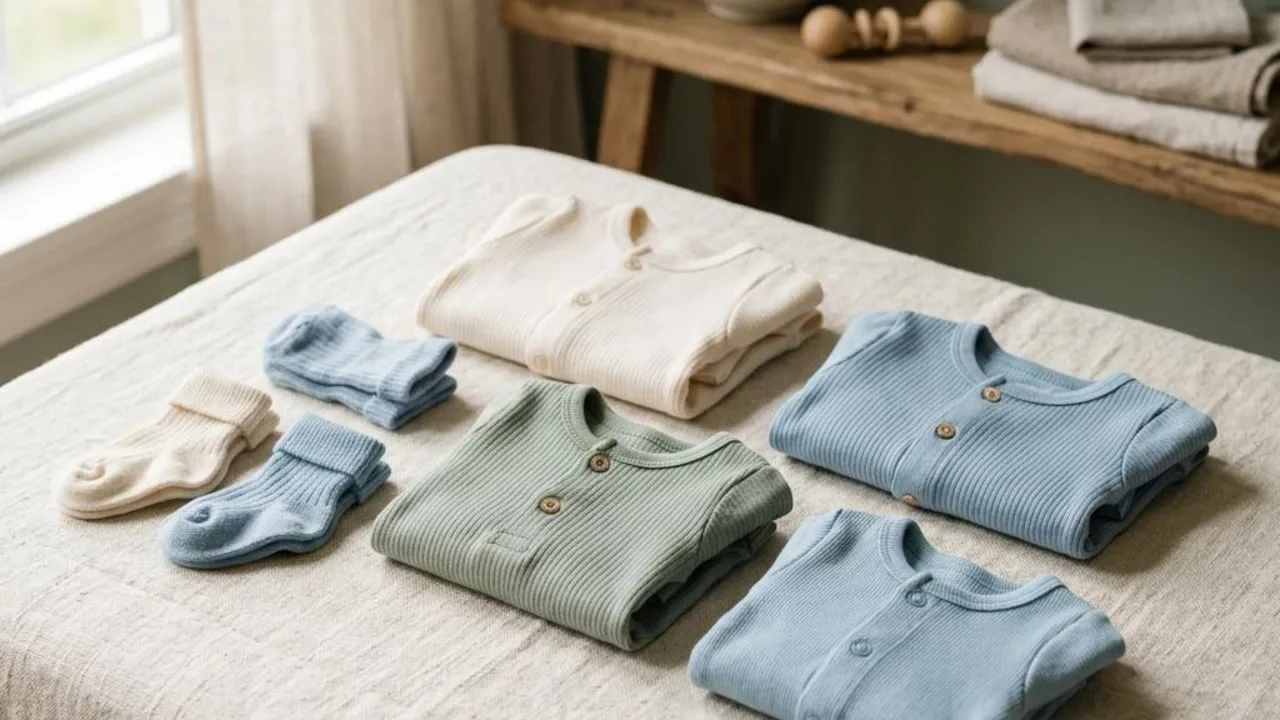
Categorization Tips
Guidelines for cleaning infant and children's clothing
Key Summary
Infant and children's clothing should first be categorized by care labels, stains, and special requirements; small items should be counted separately. Packing in separate bags does not guarantee a separate machine cycle, fragrance-free, or hypoallergenic procedure; milk stains cannot all be treated with hot water. General laundry is not medical disinfection; sensitivity or infection risks should be disclosed in advance.
Store separately
If you wish to have infant and children's clothing handled separately from adult items, please pack them in a separate bag and inform customer service.
Milk stains and food stains
Milk stains involve proteins and fats; it is not advisable to use hot water or heat at the beginning. Consider appropriate cold water treatment only when the garment label, material, and dye allow; for uncertain or dry-clean-only garments, please keep the original condition and enquire first.
Special Requirements
If family members are sensitive to certain cleaning products, please raise this during your enquiry, and customer service will explain the available arrangements.
Check labels and accessories even for small items
Infant and children's clothing may contain a mix of cotton, elastane, waterproof layers, and prints; onesies, bibs, and sleep sacks may not be suitable for the same procedure. Check care labels first, inspect snap buttons, zippers, and removable parts, and remove tissues and food crumbs to avoid contamination during the cleaning process.
Small items like socks, gloves, and bibs can be grouped and counted; inform our team if you have special handling requirements. Mesh bags help with organization, but you must confirm in advance whether they will be used during cleaning and if separate machine loads or specific products are allowed—do not assume arrangements based solely on using separate bags.
Milk stains, fruit purée, and old yellow stains must be described separately.
Milk stains involve proteins and fats, while fruit purée may contain pigments and sugars; a single bib may also have a mixture of multiple stains. You may record the food type and timing first; do not use hot water, bleach, or vigorous brushing indiscriminately. Consider gentle spot treatment only when the label permits and the material is suitable.
Old yellow stains that have already been washed or dried are not as easily lightened as fresh milk stains. Please truthfully state the products used and treatment procedures before sending them in for cleaning, and be aware that some traces may remain.
Specific requirements must be confirmed clearly; we do not treat laundry as medical treatment.
If a child has had adverse reactions to certain fragrances or products, you may list the ingredients or products to avoid and enquire if they can be accommodated. The website does not promise hypoallergenic, sterile, specialized machines, or medical-grade disinfection, and general laundry should not be understood as being able to prevent skin issues; you should seek medical advice for persistent skin symptoms.
For items involving vomit, excrement, or infectious risks, please inquire about our acceptance and service scope before scheduling. Keep items dry and in a clean area after delivery. If you notice any unusual odors or have questions upon the first use, please contact customer service.
How should bodysuits, bibs, and sleeping bags be grouped for pickup/delivery?
Scenario: Cotton onesies can be handled according to garment instructions, waterproof bibs require attention to membrane limits, and filled sleeping bags depend on washing/drying methods. Just because all three are for infants doesn't mean their structures and heat tolerances are the same; bibs with heavy milk stains should not just be written as 'one bag of baby clothes'.
Use a checklist for small items like socks, gloves, and accessories, noting detachable parts and loose press studs. If items require separate handling or need to avoid certain products, provide specific instructions and wait for confirmation; do not simply write "Baby Clothes" on the bag and assume all requirements are understood.
When pre-treating baby clothes at home, product safety is more important than higher concentration
Do not use more detergent, strong fragrance, or higher temperatures as proof of better hygiene. Dosage and available materials should follow product and garment instructions; there is no universal "double" formula for different products, and mixing cleaning products may bring more risks. If persistent skin symptoms are involved, seek help from medical professionals rather than treating laundry procedures as a cure.
ACI's safety guidelines emphasize keeping cleaning products in their original packaging and away from children and pets. Immediately store laundry pods, stain removers, and measuring cups after use. Never transfer products into beverage containers, and do not let children play with empty packaging. Seek local emergency assistance if ingestion or contact occurs.
Additional Information
American Cleaning Institute: Laundry Safety Tips
Cleaning products must be kept in their original packaging, away from children, and used according to the product label; never mix cleaning products arbitrarily.
GINETEX: Garment Care Symbols and Process Limitations
For reference regarding washing, bleaching, drying, ironing, and professional cleaning symbols; individual garments are still subject to their full labels and brand guidelines.
FAQ
Must baby clothes be washed separately in a dedicated machine?
You cannot apply one standard arrangement to every household based on general articles. Assess based on labels, dirt, and family needs; if you want items separated or specific products used, confirm in advance. The separation itself is not a commitment.
Can milk stains be cleaned more effectively by soaking in hot water?
Do not use hot water as the first step for all milk stains. Milk stains involve proteins and fats, and heat may make them harder to remove. Whether cold water or specific products can be used must still be based on the garment's label and instructions.
Does fragrance-free laundry mean it definitely won't cause sensitivity?
No. The absence of scent does not mean there are no other factors that could cause discomfort, nor can it serve as a medical guarantee. You may specify particular products or ingredients to avoid to customer service; for persistent symptoms, seek medical advice.
Can standard laundry be used as disinfection for infectious clothing?
Cannot be equated directly. When vomit, excrement, or infection risks are involved, inquire first about acceptance and processing restrictions; the website does not promise medical-grade disinfection or sterile effects.
Can old and new milk stains be guaranteed to be removed equally?
No. The duration of stay, whether it has been washed/dried, and the fabric condition all affect the results; mention previous treatments when sending for cleaning. Do not rely on repeated heating or adding chemicals in pursuit of being completely stain-free.